Evaluating Antlers: A Symbolic Decorative Font for Nature-Inspired Design
In the vast landscape of typography, most designers rely on standard alphabets to convey messages. However, specific projects demand a visual language that transcends traditional letters. Antlers represents a unique category within this space: a decorative font composed entirely of symbols rather than alphanumeric characters. These glyphs are stylized to resemble deer antlers, offering a distinct, nature-inspired aesthetic. For creators evaluating whether this tool fits their workflow, understanding its specific utility, limitations, and ideal applications is essential.
Understanding the Nature of Symbolic Typography
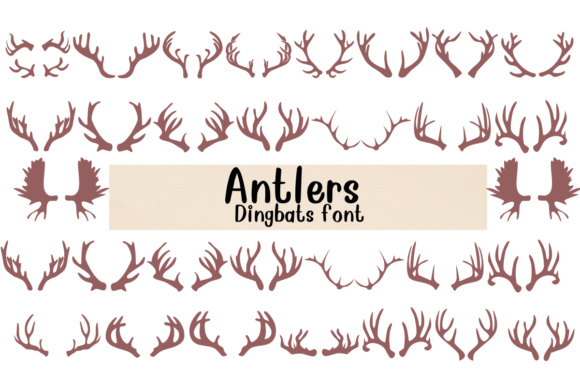
Unlike conventional typefaces that map keys to letters and numbers, Antlers functions as a dingbat or symbol font. When a user types on their keyboard, the output is not text but a graphical representation of an antler. This fundamental distinction changes how the font is utilized. It is not designed for writing sentences, headlines, or body copy in the traditional sense. Instead, it serves as a library of vector-based illustrations that can be accessed through a keyboard interface.
The primary appeal of Antlers lies in its ability to inject organic, rustic elements into digital or print media without requiring custom illustration skills. Each symbol varies slightly, mimicking the natural irregularity found in wildlife. This makes it a valuable resource for designers seeking to create borders, backgrounds, textures, or decorative accents that feel authentic to the outdoors.
Key Benefits for Design Projects
When considering Antlers for a project, several practical advantages emerge. First and foremost is efficiency. Sourcing individual high-quality vector images of antlers can be time-consuming and may involve licensing fees for each asset. A symbol font consolidates these assets into a single file, allowing for rapid deployment. Designers can type a sequence of characters to instantly generate a row of varying antler shapes, which is particularly useful for creating dividers or frame elements.
Another significant benefit is scalability and editability. Because the symbols function as font glyphs, they inherit the properties of text. This means they can be resized without losing resolution, colored using standard text color tools, and spaced using kerning and leading controls. For users working in software like Adobe Illustrator, InDesign, or even word processors, this offers a level of control that raster images often lack. The ability to manipulate the "text" flow allows for intricate patterns that would otherwise require manual alignment.
Furthermore, Antlers provides a cohesive visual theme. Since all symbols originate from the same design family, they share consistent line weights, styles, and artistic nuances. This ensures that a document or design piece maintains visual harmony, avoiding the disjointed look that can occur when mixing clip art from different sources.
Tradeoffs and Limitations to Consider
While the utility of Antlers is clear in specific contexts, it is crucial to acknowledge its limitations to avoid misapplication. The most obvious constraint is the lack of linguistic capability. Since the font does not contain letters or numbers, it cannot be used for communication in the traditional sense. It is purely decorative. Attempting to use it for logos that require legible brand names or for informational signage would render the content unreadable.
Additionally, reliance on a symbol font can sometimes limit creative flexibility compared to custom illustration. While the symbols vary, they are still pre-determined shapes. If a project requires a very specific angle, size ratio, or stylistic deviation that the font does not offer, the designer may find themselves restricted. In such cases, converting the font to outlines and manually editing the vector paths becomes necessary, which adds steps to the workflow.
There is also the consideration of file portability. If a document utilizing Antlers is shared with a colleague or sent to a printer who does not have the font installed, the symbols may revert to default characters (such as standard letters or boxes), completely breaking the design. Ensuring that all stakeholders have the font file or outlining the text before final export is a mandatory step in the production process.
Ideal Use Cases for Antlers
Determining whether Antlers aligns with your goals involves matching the font's strengths to your project requirements. It is a strong fit for industries and themes centered around nature, wildlife, and the outdoors. Specific scenarios where this font excels include:
- Hunting and Fishing Branding: Creating textured backgrounds for business cards, brochures, or merchandise for guides and outfitters.
- Rustic Event Invitations: Designing borders and corner accents for wedding invitations or party decor with a woodland theme.
- Packaging Design: Adding subtle organic patterns to labels for artisanal goods, such as craft beers, honey, or cabin-style cosmetics.
- Web and UI Elements: Generating repeating background patterns or decorative dividers for websites focused on conservation, camping gear, or outdoor lifestyle blogs.
In these instances, the font acts as a thematic enhancer, reinforcing the subject matter without overpowering the core message.
When to Explore Alternatives
Conversely, there are situations where alternatives may be worth considering. If a project requires detailed typographic hierarchy where the decorative element must integrate seamlessly with readable text, a standard serif or sans-serif font with ligatures might be more appropriate. Similarly, if the design demands highly specific, non-repetitive imagery, commissioning a custom illustration or purchasing a diverse pack of individual vectors may yield better results than relying on the finite set within a font file.
For users who need dynamic animation or interactive elements in a digital environment, standard image assets or SVG files often provide more robust integration capabilities than web fonts, depending on the platform being used.
Making the Decision
Selecting Antlers ultimately depends on the balance between efficiency and specificity. If the goal is to quickly populate a design with high-quality, scalable, nature-themed graphics that maintain a consistent style, this symbolic font is an excellent choice. It streamlines the workflow for decorative tasks and ensures professional-grade visuals.
However, if the project relies heavily on legibility, requires unique custom shapes outside the font's repertoire, or will be distributed to environments where font installation cannot be guaranteed, other solutions should be evaluated. By understanding both the creative potential and the technical constraints of Antlers, designers can make informed decisions that enhance their work while avoiding common pitfalls associated with decorative typography.