Hummingbird and Fuchsia: A Practical Evaluation for Embroidery Projects
In the realm of machine embroidery, selecting a design that balances aesthetic appeal with technical execution is often more challenging than it appears. The Hummingbird and Fuchsia digitized pattern represents a specific category of nature-inspired motifs that aim to capture both movement and botanical detail. For professionals and serious hobbyists alike, the decision to integrate such a design into a workflow depends less on the subject matter and more on how well the digitization handles stitch density, color transitions, and fabric compatibility. This evaluation breaks down the practical attributes of this specific composition to help you determine if it aligns with your current project requirements.
Design Composition and Visual Dynamics
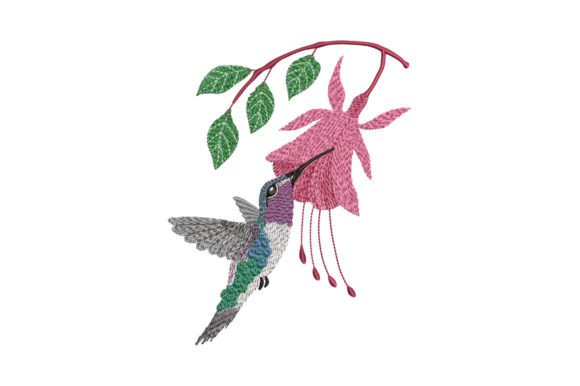
At its core, the Hummingbird and Fuchsia design relies on a classic juxtaposition: the dynamic energy of a bird in flight against the static, lush volume of a blooming flower. The hummingbird serves as the focal point, typically rendered with vibrant greens and blues. In high-quality digitizing, these colors are not merely blocked out but are blended through careful stitch angling to suggest the iridescence found in actual hummingbird feathers. This requires a nuanced approach to thread selection and stitch direction to avoid a flat, cartoonish appearance.
Complementing the bird is the fuchsia flower, chosen for its distinctive drooping shape and vivid purple hues. The design leverages the natural architecture of the fuchsia—its open petals and prominent stamens—to create depth. Unlike simpler floral patterns that rely on solid fills, a robust version of this design utilizes varied stitch types to mimic the delicate texture of petals versus the structural rigidity of the branch and leaves. The inclusion of foliage adds necessary volume, preventing the composition from looking top-heavy and ensuring a balanced distribution of stitch count across the hoop area.
Technical Execution and Stitch Quality
When assessing the Hummingbird and Fuchsia for production use, the primary metric is the quality of the underlying digitization. A design that looks promising in a preview image can fail miserably on the machine if the stitch path is inefficient. Key indicators of a well-prepared file include logical jump sequences and minimal trims. For a design involving two distinct elements like a bird and a flower, the digitizer must decide whether to treat them as a single continuous run or separate objects. Ideally, the file should minimize travel stitches between the hummingbird and the fuchsia to reduce thread waste and potential puckering.
The handling of small details is another critical factor. The hummingbird's beak and the fine lines of the fuchsia stamens require precise satin stitching or fine running stitches. If the design is scaled down for smaller applications, such as cuff links or pocket logos, these elements risk becoming indistinct blobs if the minimum stitch length was not properly configured during the digitizing phase. Conversely, when scaled up for larger panels, the fill patterns within the leaves and petals must be dense enough to prevent fabric show-through but loose enough to maintain fabric drape.
File Format Versatility
One of the practical strengths of a professional-grade Hummingbird and Fuchsia package is the inclusion of multiple embroidery file formats. Compatibility is non-negotiable in a mixed-machine environment. Whether operating legacy Brother machines, modern Janome units, or industrial Tajima systems, the ability to access the design in formats like .PES, .DST, .EXP, and .JEF ensures seamless integration. This flexibility eliminates the need for third-party conversion software, which can sometimes introduce errors in stitch data or alter color stops unexpectedly.
Material Compatibility and Application Scenarios
The versatility of this design extends to its application across various textiles, though success varies by material type. For home decor items like throw pillows or tablecloths, the design performs exceptionally well on medium-to-heavy weight cottons or linen blends. These fabrics provide the stability needed to support the density of the floral fills without significant distortion. The "romantic mood" described in the design brief translates effectively here, adding a sophisticated accent to living spaces.
In the context of apparel, caution is advised. While the design is suitable for jackets, denim shirts, or structured bags, applying it to lightweight knits or stretchy fabrics requires careful stabilization. The combination of the detailed bird and the lush flower creates a relatively high stitch count area. Without appropriate cut-away stabilizers, there is a risk of the design pulling the fabric, leading to warping around the edges of the fuchsia petals. For entrepreneurs producing custom apparel, testing the design on a scrap piece of the intended garment fabric is a mandatory step before full-scale production.
- Home Decor: Ideal for pillowcases, wall hangings, and table runners where fabric stability is high.
- Accessories: Works well on tote bags, aprons, and structured hats.
- Apparel: Best suited for woven shirts, jacket backs, or denim; requires heavy stabilization for knits.
- Gift Items: Excellent for handkerchiefs or decorative panels intended as keepsakes.
Workflow Efficiency and Consistency
For freelancers and small business owners, time is a direct cost. The Hummingbird and Fuchsia design offers value through its repeatability. Once the tension and stabilization settings are dialed in for a specific fabric, the design should produce consistent results across multiple runs. This reliability is crucial for fulfilling orders where a client requests matching sets, such as a series of napkins or a collection of branded merchandise.
However, users should be aware of potential limitations regarding thread consumption. The vibrant greens, blues, and purples required to do justice to the nature theme may necessitate frequent color changes if the design is not optimized for fewer stops. While this enhances the visual fidelity, it increases production time. Evaluating whether the aesthetic gain justifies the additional machine runtime is a decision each operator must make based on their pricing model and deadline constraints.
Long-Term Value and Audience Fit
Who benefits most from incorporating this design? It is particularly well-suited for creators targeting niches interested in nature, gardening, and romantic aesthetics. Educators teaching embroidery techniques might also find it a valuable case study for demonstrating how to manage complex color blends and organic shapes. The design's inherent elegance makes it a strong candidate for gift markets, especially during spring and summer seasons when floral and wildlife motifs see increased demand.
From a long-term perspective, investing in a high-quality version of Hummingbird and Fuchsia provides a reusable asset. Unlike trendy graphics that may date quickly, nature motifs possess a timeless quality. As long as the digitization holds up under repeated use and the thread colors remain available, this design can serve as a staple in a digital library for years. Its ability to convey sophistication without being overly ornate allows it to fit into both casual and formal product lines.
In conclusion, the Hummingbird and Fuchsia embroidery design stands out as a robust option for those seeking to blend natural beauty with technical precision. Its success in real-world applications hinges on respecting the technical requirements of the stitch data and choosing appropriate materials. By understanding its strengths in visual composition and its limitations regarding fabric stretch, users can leverage this design to create refined, eye-catching products that resonate with audiences appreciating the finer details of machine embroidery.