Strategic Design Implementation: Leveraging Decorative Hand Mirror Frame Laser Cut Files for Business Growth
In the modern landscape of digital fabrication and creative entrepreneurship, the distinction between a hobbyist and a scalable business often lies in the quality of foundational assets. The Decorative Hand Mirror Frame Laser Cut design represents more than just an aesthetic pattern; it is a strategic resource for creators looking to optimize their production workflows, diversify their product lines, and enhance brand positioning. When approached with intentionality, these digital files serve as the backbone for a wide array of tangible outputs, ranging from high-end home decor to bespoke fashion accessories.
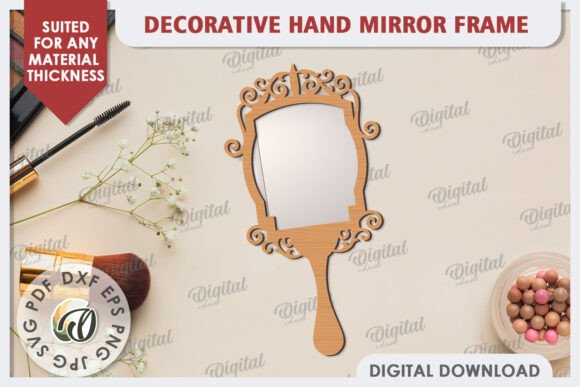
It is critical to understand at the outset that acquiring a Decorative Hand Mirror Frame Laser Cut file is a procurement of intellectual property, not a physical good. This digital nature offers immediate logistical advantages: there are no shipping delays, no inventory storage costs, and no risk of physical damage during transit. Your purchase typically includes a comprehensive zip folder containing designs in SVG, DXF, EPS, PDF, JPG, and PNG formats. This multi-format approach ensures compatibility across various software ecosystems and machinery, from consumer-grade Cricut machines to industrial laser cutters and CNC routers. By securing these versatile assets, you gain the flexibility to iterate rapidly and respond to market demands without the lead times associated with traditional manufacturing.
Aligning Digital Assets with Strategic Business Goals
The decision to integrate a Decorative Hand Mirror Frame Laser Cut into your portfolio should be driven by clear operational and branding objectives. For small business owners and freelancers, the primary goal is often efficiency. Using pre-engineered, precision-cut files eliminates the hours spent on vector tracing and structural testing. This allows you to reallocate time toward marketing, customer engagement, and product finishing—activities that directly influence revenue.
Furthermore, these designs support scalability. Because the files are digital, you can produce one unit or one thousand units with consistent quality. This consistency is vital for building a reputable brand. Whether you are creating stationery, textile patterns, or tableware, the intricate details of a laser-cut mirror frame convey a sense of craftsmanship and attention to detail that resonates with consumers seeking unique, artisanal products. The ability to apply this single design across different materials—wood, acrylic, leather, or even heavy cardstock—demonstrates operational agility, allowing you to test multiple market segments with minimal upfront investment.
Practical Applications Across Industries
The versatility of the Decorative Hand Mirror Frame Laser Cut extends far beyond the literal creation of mirrors. Savvy entrepreneurs recognize that the frame itself is a modular component that can be adapted for diverse use cases. Consider the following strategic applications:
- Home Decor and Interior Design: Produce standalone wall art or functional mirrors that serve as focal points in residential or commercial spaces. The intricate patterns add texture and depth to minimalist interiors.
- Fashion and Textiles: Utilize the PNG or JPG versions of the design for sublimation printing on fashionable clothes, scarves, or tote bags. Alternatively, use the vector files to cut leather patches or fabric appliqués that elevate garment aesthetics.
- Packaging and Branding: Adapt the frame motif to create luxury packaging inserts, gift box windows, or branded tags. This cohesive visual language strengthens brand recognition and enhances the unboxing experience for customers.
- Stationery and Paper Goods: Scale the design down for wedding invitations, greeting cards, or journal covers. The precision of laser cutting adds a tactile element that digital printing alone cannot achieve.
- Educational Workshops: Educators and community leaders can use these files as teaching tools for STEM/STEAM programs, demonstrating the intersection of geometry, art, and engineering.
Each of these applications requires a slightly different approach to material selection and finishing, but the core asset remains the same. This modularity is where the true value lies; you are not buying a single product idea, but rather a design system that can be customized to fit specific niche requirements.
Risk Management and Intentional Implementation
While the opportunities are vast, relying on digital design assets without a clear strategy carries risks. A common pitfall for creators is the "random execution" trap—producing items simply because the file exists, rather than because there is a market demand or a cohesive brand narrative. Using a Decorative Hand Mirror Frame Laser Cut without context can lead to inventory bloat and diluted brand identity. If your shop sells rugged, industrial-style goods, suddenly introducing an ornate, Victorian-style mirror frame may confuse your existing customer base and erode trust.
To mitigate this, conduct a thorough audit of your current offerings before integrating new designs. Ask yourself: Does this design align with my brand's voice? Who is the specific customer for this product? What problem does this item solve or what emotion does it evoke? Strategic planning involves mapping out the entire lifecycle of the product, from material sourcing to final pricing. For instance, if you plan to sell these frames as high-end decor, you must source premium materials like walnut wood or colored acrylic and invest in professional finishing techniques such as sanding, staining, or polishing. Conversely, if the target is the craft fair circuit, cost-effective materials like MDF or birch plywood may be more appropriate to maintain healthy margins.
Technical Considerations for Optimal Results
Success with laser cutting also depends on technical proficiency. The included file formats (SVG, DXF, EPS) are industry standards, but they require proper handling within your design software. Before sending a job to the laser cutter, always perform a simulation or a test cut on scrap material. Different materials react differently to laser heat; acrylic melts, wood chars, and leather burns. Understanding the kerf (the width of the material removed by the laser) is essential for ensuring that joints fit perfectly and that intricate details do not collapse.
Additionally, consider the limitations of your equipment. While the Decorative Hand Mirror Frame Laser Cut is designed for precision, extremely fine details may not translate well on lower-wattage machines or with certain material thicknesses. Adjusting line weights and simplifying complex nodes may be necessary to ensure durability and aesthetic appeal. This iterative process of testing and refining is where professional expertise separates successful products from failed prototypes.
Long-Term Value and Customer Experience
Ultimately, the goal of utilizing high-quality digital assets is to foster long-term business sustainability and customer loyalty. When a customer purchases a product featuring a Decorative Hand Mirror Frame Laser Cut, they are buying an experience. The precision of the cut, the quality of the material, and the thoughtful design all contribute to perceived value. Positive experiences lead to repeat business, referrals, and strong online reviews, which are crucial for organic growth in competitive marketplaces.
Moreover, owning the digital files grants you the autonomy to update and evolve your product line continuously. You can experiment with new color combinations, limited edition runs, or seasonal variations without needing to commission new designs from scratch. This agility allows you to stay relevant in trending markets and respond quickly to shifts in consumer preferences.
In conclusion, the Decorative Hand Mirror Frame Laser Cut is a powerful tool for those willing to approach it strategically. It is not merely a file to be downloaded and cut; it is a catalyst for innovation, efficiency, and brand development. By understanding the technical nuances, aligning the design with clear business goals, and executing with precision, creators can transform a simple digital download into a cornerstone of a thriving creative enterprise. Remember, the creation options are endless, but the results depend entirely on the clarity of your vision and the discipline of your execution. If you have questions regarding file compatibility or specific application ideas, reaching out to the creator can provide further clarity and ensure you are maximizing the potential of your purchase.